Hyperloop – A Train From Science Fiction
The 5th mode of transportation – Hyperloop is about to revolutionize the way we travel. Read about this surreal transport system from future.
Multi-block meshes for aerospace applications. Include, gridding strategies, CFD and flow physics analysis, grid influence on CFD results. Cover various aspects like component optimization, transport aircrafts, high lift devices, fighter aircrafts, launch vehicles, reentry capsules, drones, helicopters, nozzles, ducts, engine nacelle, etc.
Visit our page Aerospace page https://www.gridpro.com/industries/aerospace
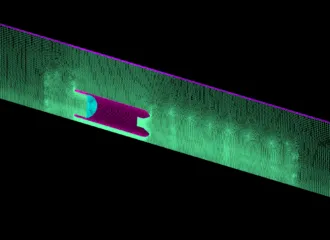
The 5th mode of transportation – Hyperloop is about to revolutionize the way we travel. Read about this surreal transport system from future.
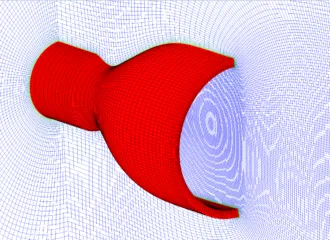
CFD meshing of rocket engine nozzles needs accurate capturing of separated shock, Mach disc, boundary layer. Read to know how to mesh nozzles.
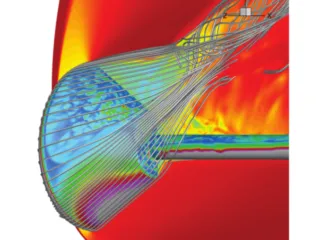
Accurate flow prediction around reentry vehicles requires high-quality grids with flow feature-based alignment. Tools in GridPro like nesting, compact enrichment aid in building flow physics aligned grids precisely capturing flow features like shock, expansion fan, free shear layer, wake, etc.
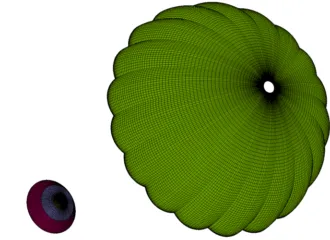
Supersonic parachutes brake the reentry vehicles’ speed during atmospheric descent. Read to know supersonic parachutes’ reentry aerodynamics.
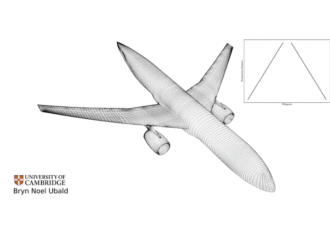
Inspired by Whale’s flippers, tubercle wing design shows distinct advantages over convention wing blades. Read to know about tubercle wings.
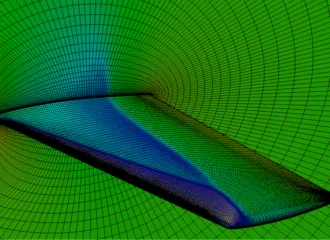
Using standard CFD test cases of NACA-0012 and the Onera M6 wing, this article shows the influence of mesh type on CFD simulation results.
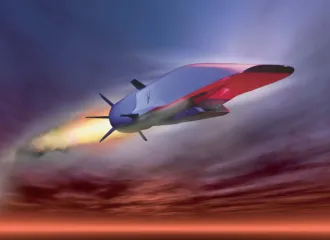
Hypersonic flights – The new means of air transport and military supremacy. Read to know about hypersonics and scramjet technology.

Airfoil meshing has evolved over years. Read to know the traditional and improved structured meshing methods to get optimal CFD results.
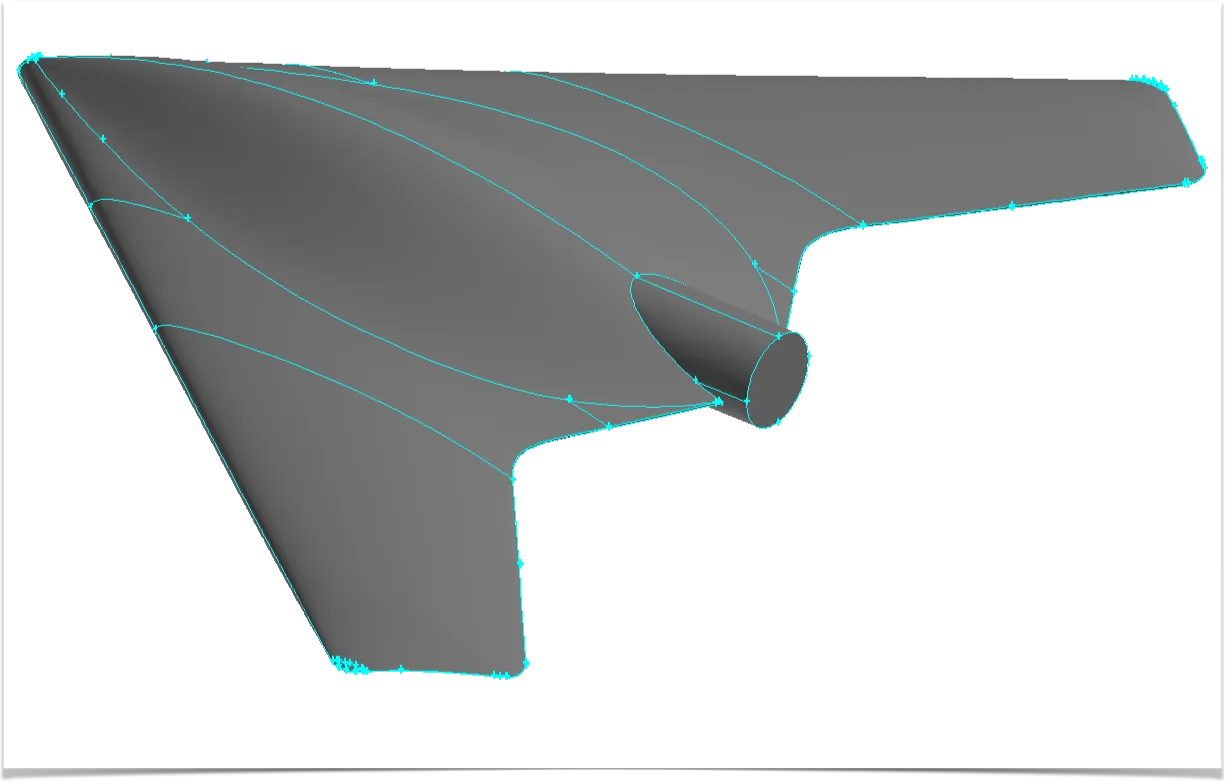
A sequential set of grids with successive levels of refinement is generated to conduct grid convergence study. Read a case study on GCS.
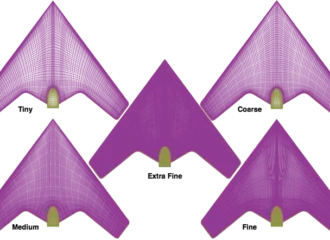
Grid convergence study means generating sequential grids, running CFD solver and analyzing the solution change with grids. Read to know GCS