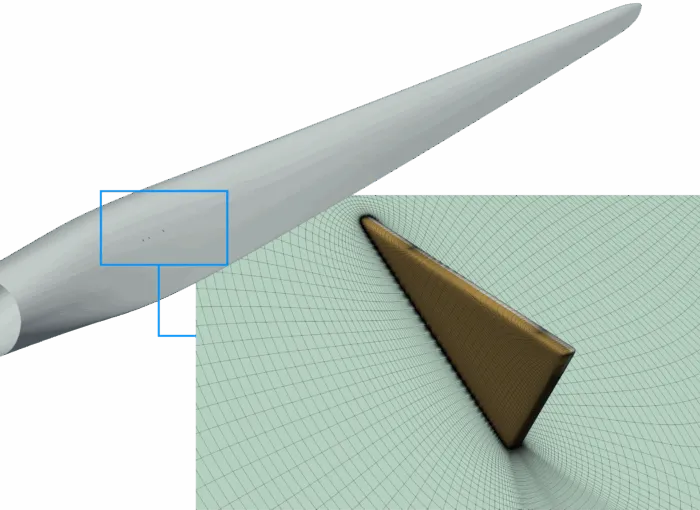
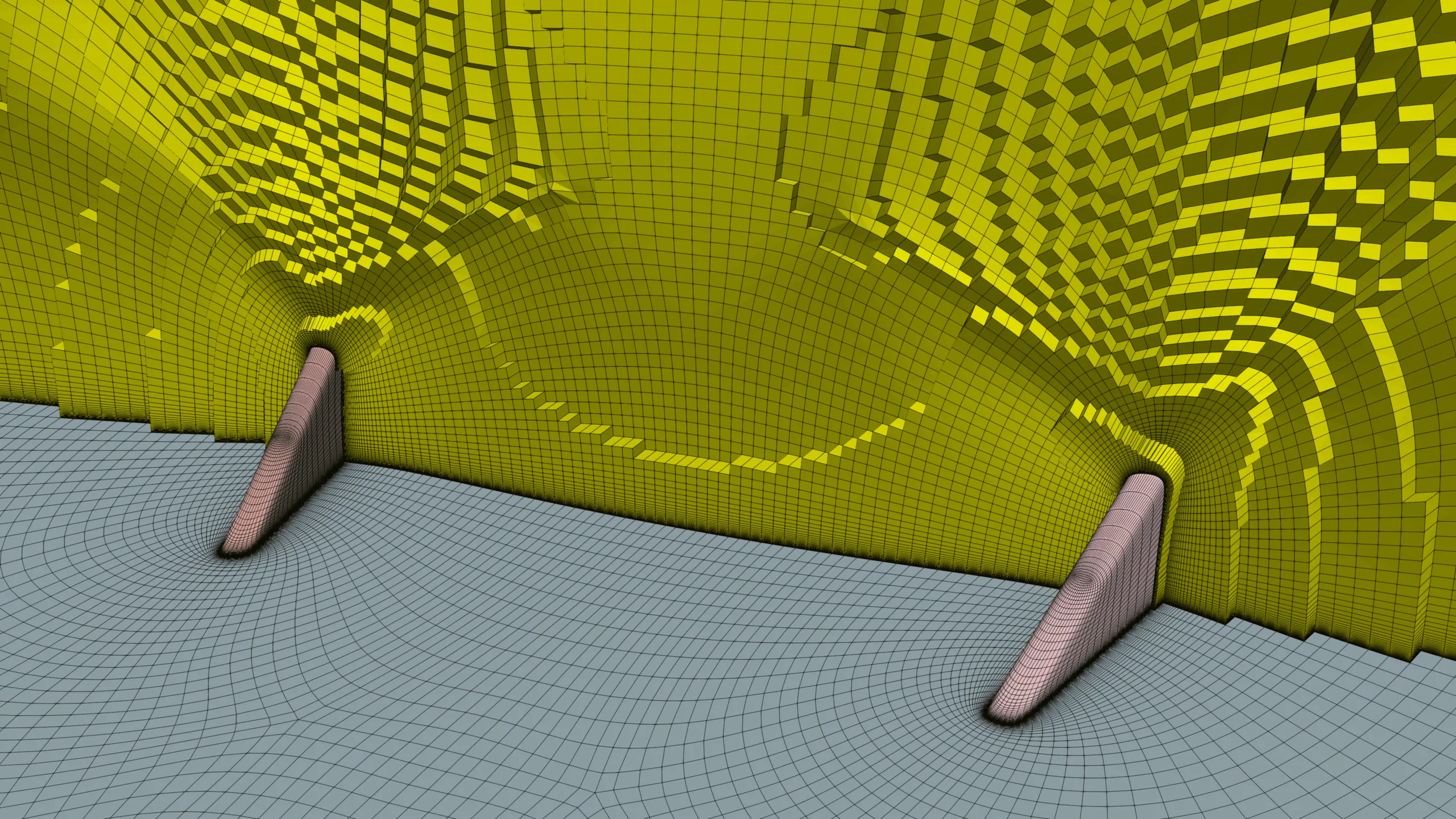
Figure 1: Hexahedral Meshing of Vortex Generators in Wind Turbines.
1588 words / 8 min read
Vortex generators can boost turbine performance dramatically—but only if your mesh captures their near-wall physics with accuracy. In this guide, learn a proven multi-block workflow that keeps y⁺stable, reduces skewness, and delivers high-fidelity CFD results you can trust.
Introduction: Why Accurate Meshing of Vortex Generators Matters
Wind turbine engineers appreciate the strong lift boost that vortex generators (VGs) can deliver, especially on blades operating in rough or degraded surface conditions. But if you ask a CFD engineer about them, you’ll likely hear a familiar line: “Meshing the VG is harder than simulating the entire blade.” And that sentiment is justified. A VG is tiny, sharp-edged, and positioned in the most sensitive portion of the boundary layer—right where the flow is thinnest, most fragile, and least forgiving. Even minor mesh distortions here can cause numerical instability, unrealistic gradients, or complete loss of physical correctness.
Recent research findings show just how impactful VGs can be when modeled correctly. Under rough-wall operating conditions, controlled experiments (Marine Sci and Engg Journal) reported that VGs reduce flow separation by nearly one-third and increase power output by close to 48%. These performance gains are significant, especially for blades already experiencing surface erosion or contamination. But these benefits do not appear automatically in CFD. They only emerge when the mesh precisely represents near-wall momentum exchange and resolves the VG geometry without compromising y⁺ or orthogonality.
This is where structured multi-block meshing becomes essential. Unlike unstructured approaches, a structured topology allows full control over cell alignment, growth rates, and boundary-layer thickness. It enables smooth extrusion around VG edges, reduces skewness, and retains the numerical stability required to reproduce real-world VG effects. In short: to model VGs correctly, the mesh must be exceptionally clean—and structured blocks give you the tools to achieve that.
Why Vortex Generators Are Essential to Turbine Aerodynamics
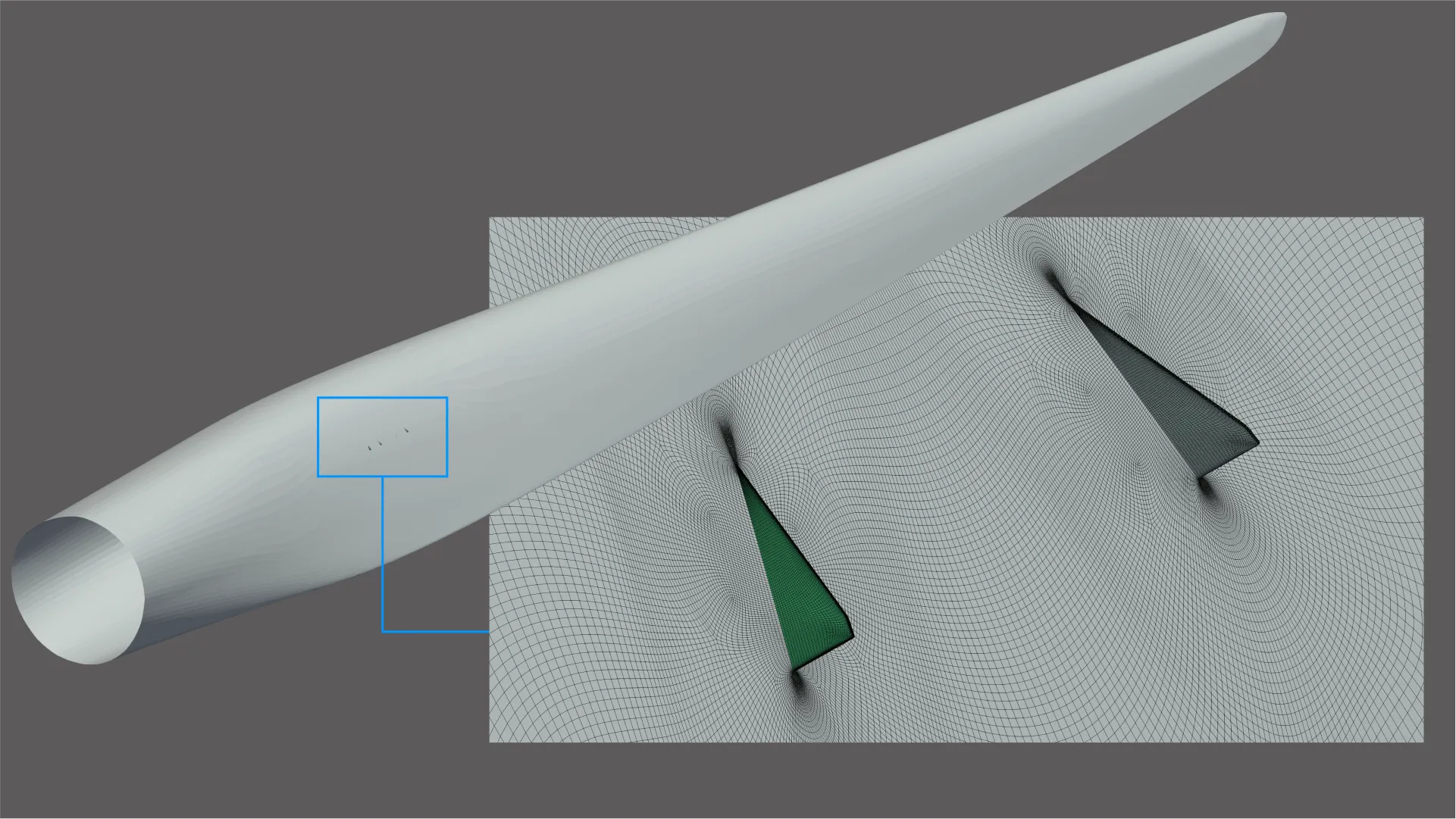
Vortex generators (VGs) play a significant role in improving the aerodynamic performance of wind turbine blades, especially as they age and accumulate surface roughness. Controlled studies (Marine Sci and Engg Journal) show that VGs help maintain attached flow by energizing the boundary layer, reducing separation, and restoring lift in conditions where a bare blade would begin to stall.
Full-scale assessments of multi-megawatt turbines (Renewable Energy Journal) reinforce this evidence. Turbines equipped with VGs consistently demonstrate delayed stall onset, smoother surface flow, and measurable increases in power output. These improvements are not marginal—they can shift the power curve upward in operating regions that normally suffer from aerodynamic losses.
Research investigating different VG shapes and configurations (Energies Journal) shows that even small adjustments in height, angle, or spacing can greatly affect boundary-layer behavior. This sensitivity highlights just how dependent VG performance is on exact geometry and flow resolution.
It is for this reason, that the appropriate resolution of the flow field around VGs is a must when we do CFD simulations. If the VG is not captured correctly, the CFD solution may appear well behaved numerically, yet fail to predict the turbine’s actual behavior. This is why accurate meshing matters: the VG’s aerodynamic benefits exist only when near-wall physics are resolved with high fidelity.
Why Meshing Vortex Generators Is Difficult
Meshing vortex generators (VGs) is challenging because they combine small geometric features with extremely sensitive flow physics. A VG may only be a few millimeters tall, but it sits inside the tightest region of the boundary layer—where gradients in velocity, shear stress, and turbulence are the sharpest. Any weakness in mesh quality here can permeate through the entire simulation. Studies examining transitional boundary-layer behavior (Ocean Engg Journal) show that even slight distortions near the VG’s leading edge can alter shear distribution, weaken momentum transfer, and shift separation points by a significant margin.
The difficulty isn’t just the small size of the geometry. It’s the fact that the flow around a VG changes direction rapidly, creating strong local vortices that depend on precise near-wall resolution. If the first-layer spacing, orthogonality, or cell skewness is off—even by a little—the numerical model may fail to form the correct vortical structures.
Stall-prevention studies (Springer Publication) emphasize that errors near the VG base can distort the entire downstream flow field. Unstructured meshes often struggle to maintain consistent y⁺ and clean cell alignment around these sharp edges.
This is why VG meshing is often considered more difficult than the blade itself: the geometry is small, the physics are intense, and the simulation is unforgiving. Structured meshing workflows provide the stability needed to accurately resolve these complexities.
Why Structured Multi-Block Meshing Works Better
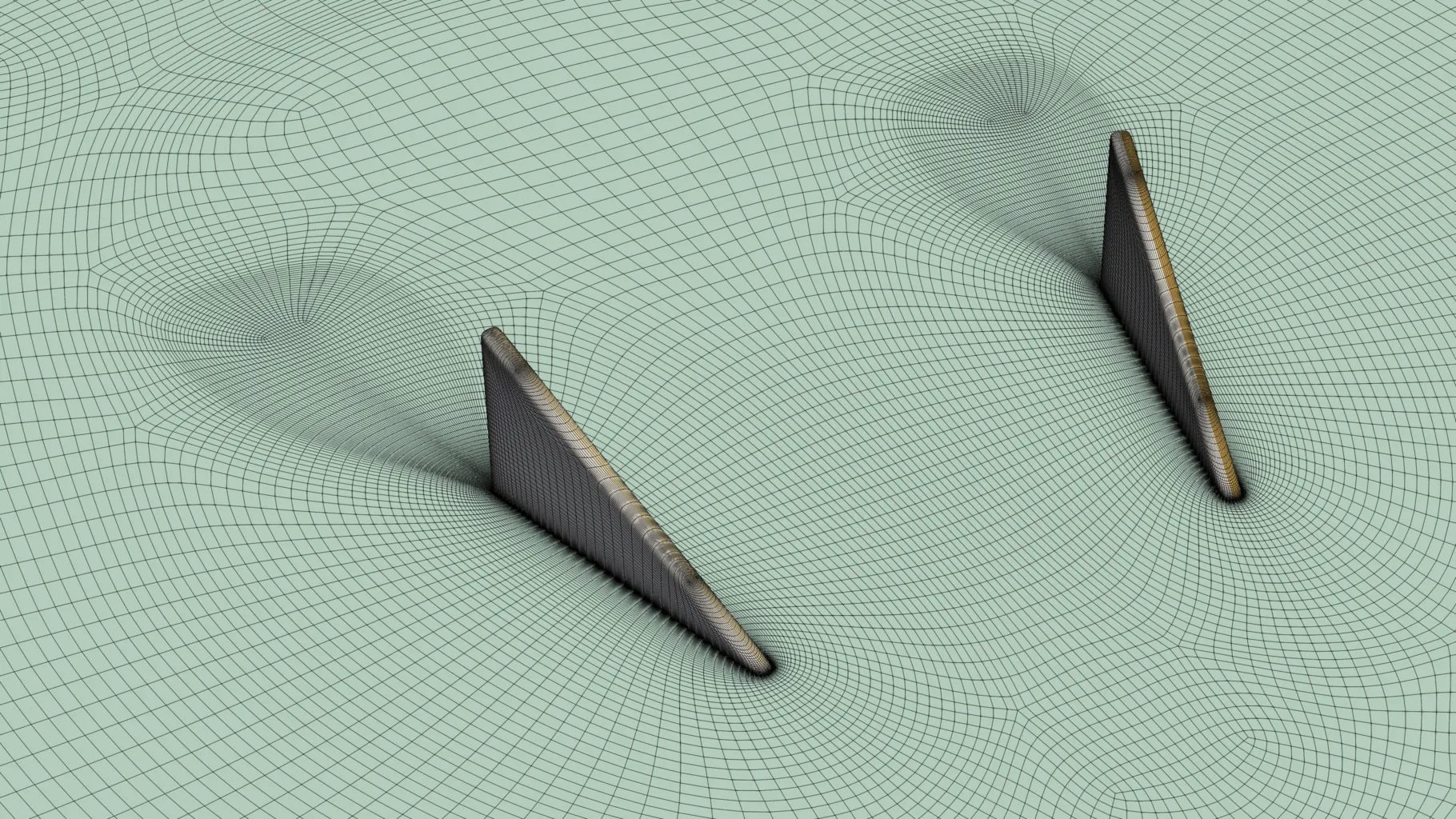
Structured multi-block meshing is particularly effective for vortex-generator (VG) simulations because it gives engineers exact control over the boundary-layer topology. Unlike unstructured meshes—where cell shapes and alignment can vary unpredictably—structured blocks enforce smooth, continuous grid lines that follow the blade surface and VG geometry exactly. This alignment approach is critical in regions where the fluid flow is highly sensitive. Studies on wind-turbine blade meshing (WES Journal) show that structured approaches consistently produce better orthogonality and more stable y⁺ distributions.
Multi-block layouts also allow the VG to be isolated inside its own dedicated block. By controlling topology at this local scale, the mesh can resolve the sharp VG edges cleanly without distorting neighboring cells. Research on aerodynamic grid generators (WES Journal) demonstrates how dividing complex geometric structures into smaller, well-aligned blocks reduces skewness and improves solver behavior.
Beyond geometric accuracy, structured blocks make boundary-layer extrusion more reliable. Cell growth can be set smoothly and predictably, producing cleaner layers even around tight curvature. The result is a mesh that captures VG-induced vortices more faithfully and maintains numerical stability, making structured multi-block methods the preferred choice for high-fidelity VG simulations.
A Simple, Repeatable Method for Meshing Vortex Generators (Without Killing Your y⁺)
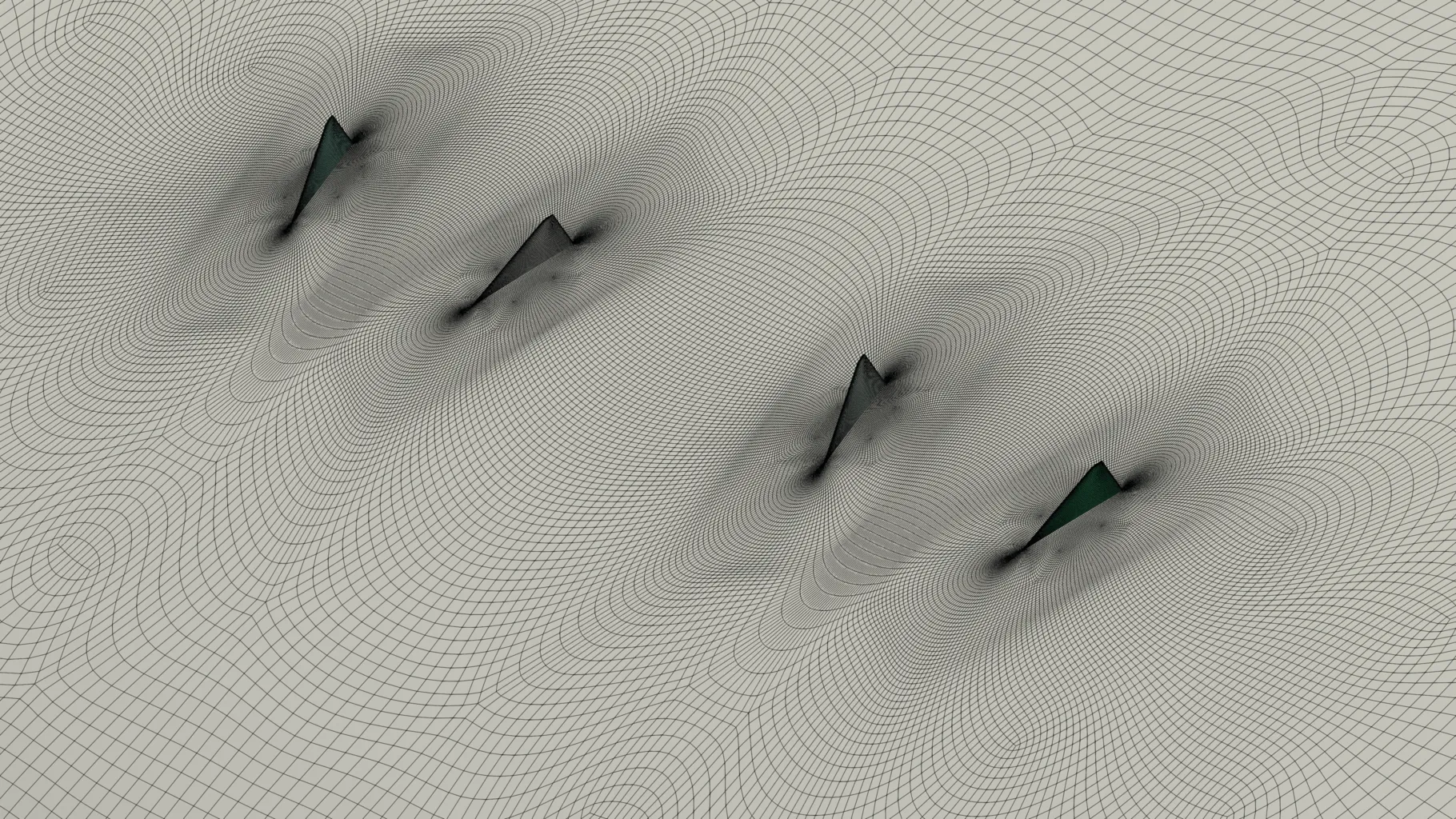
Meshing vortex generators (VGs) becomes far easier when the process is broken into a clear, repeatable sequence. The goal is simple: preserve clean boundary-layer topology while resolving the VG’s sharp edges and strong local gradients. The steps below follow practices validated in VG layout research (Applies Sciences Journal) and turbine blade meshing studies (WES Journal).
1. Start with Clean, Split Geometry: Begin by ensuring the blade surface is watertight and that the VG is correctly merged and split along its base. Clean geometry reduces deformation during block creation and prevents layer collapse. VG performance studies show that small geometric inaccuracies can shift separation points significantly, reinforcing the need for accurate modeling.
2. Block the Blade Surface First: Create structured blocks along the blade in both the chordwise and spanwise directions. Establishing this base topology first provides a stable framework for adding VG sub-blocks later and ensures that surface curvature is captured smoothly.
3. Add a Local Sub-Block for Each VG: Each VG should live inside its own dedicated block. This isolates the sharp edges and allows the mesh to resolve the VG without distorting nearby cells. Multi-block aerodynamic meshing research (WES Journal) demonstrates how local blocks improve orthogonality and keep gradients physically correct.
Extrude the Boundary Layer Smoothly: Use hyperbolic or structured extrusion to generate layers around both the blade and the VG. Studies on boundary-layer extrusion (Applied Sciences Journal) show that smooth growth rates reduce skewness and improve solver stability.
5. Smooth Transitions and Check y⁺ Everywhere: Ensure transitions between blocks are gradual to prevent sudden jumps in cell size. Consistent y⁺—on the blade and the VG—is vital for accurate vortex formation. Mesh-sensitivity studies (WES Journal) confirm that stable near-wall spacing directly impacts power-prediction accuracy.
How GridPro Makes Meshing Vortex Generators Easier
GridPro simplifies the challenge of meshing vortex generators (VGs) by giving engineers fine control over structured multi-block layouts. Instead of fighting distorted or irregular cells, GridPro lets you assign clean blocks directly around the blade and each VG, ensuring that the topology stays aligned with the geometry. Research on multi-block aerodynamic grid generation have shown that, subdividing complex surfaces into well-organized blocks significantly reduces skewness and improves CFD stability.
GridPro’s automated smoothing and high-quality extrusion tools help maintain orthogonality and consistent layer growth—two requirements for capturing VG-induced vortices accurately.
Engineers frequently note that GridPro’s structured approach “removes the guesswork” from meshing. By keeping the topology clean and predictable, it becomes much easier to hit target y⁺ values, avoid mesh collapse near VG edges, and achieve stable, high-fidelity simulations.
What a Good Vortex Generator Mesh Should Look Like
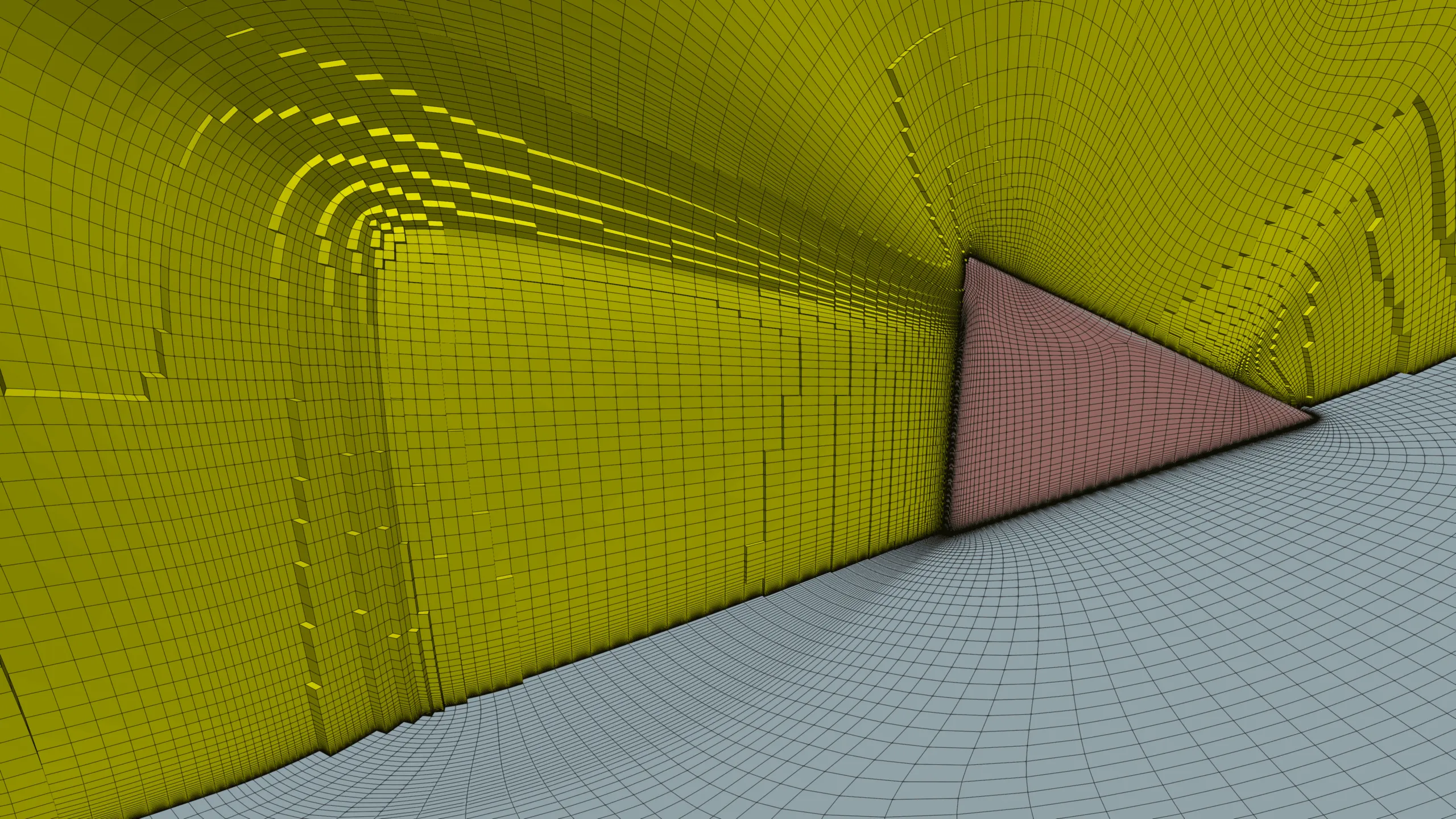
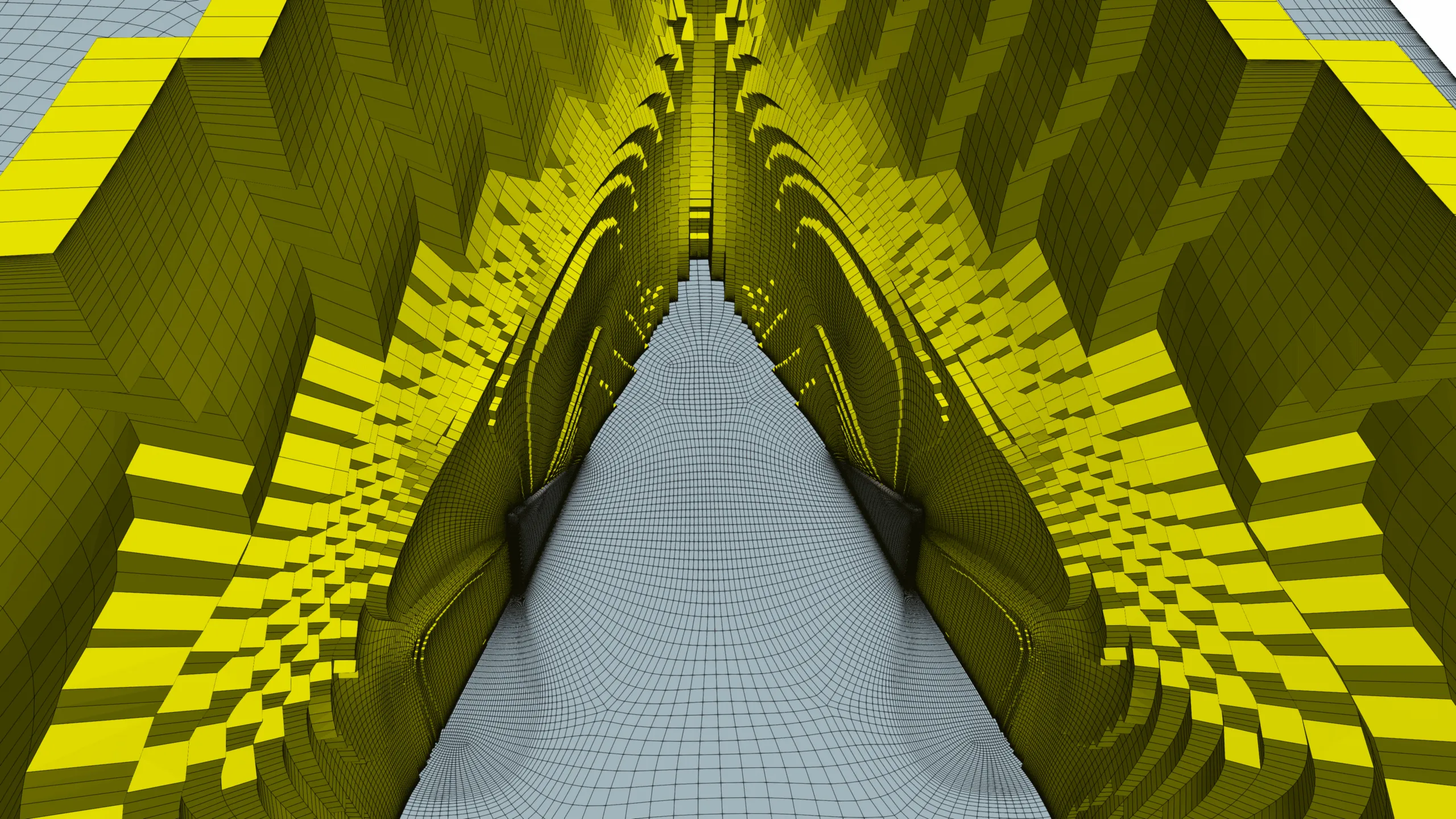
A high-quality vortex-generator (VG) mesh maintains smooth, orthogonal layers across both the blade surface and the VG itself. Refinement must be tight around VG edges, with gradual layer expansion to preserve stability in the boundary layer. Studies on turbine mesh sensitivity (WES Journal) show that consistent y⁺, low skewness, and controlled growth rates are essential for forming accurate vortices.
A good VG mesh also avoids abrupt transitions between blocks, preventing distortion and numerical noise. When these elements are in place, the CFD solution captures VG-driven flow behavior reliably and matches real-world turbine performance.
Conclusion
Meshing vortex generators (VGs) accurately is vital to capturing their real aerodynamic benefits on wind turbine blades. Because VGs sit in the most sensitive region of the boundary layer, even small flaws in mesh quality can distort separation behavior, vortex formation, and overall turbine performance.
A structured multi-block approach provides the control needed to maintain clean topology, smooth extrusion, and stable y⁺ values around these sharp, tiny features. When each VG is placed in its own well-aligned block and the surrounding layers are carefully managed, the CFD solution becomes far more reliable. In short, mastering the mesh is the key to modeling VG physics with confidence.
Interested in Using GridPro for Your Wind Turbine Meshing Projects?
GridPro’s advanced multi-block structured meshing tools deliver the precision, efficiency, and scalability needed for aerodynamic simulations of turbine blades and rotors.
Click Here to Learn More or Request a Demo.
Further Reading
- How CFD Meshes Are Built for Modern Wind Turbine Blades: Why Structure Still Wins
- Capturing Tip Vortices: LES Meshing Strategies Using Structured Multi Block Grids
- Nesting Your Way to Mesh Multi-Scale CFD Simulation!
- Automated Hexahedral Meshing with GridPro: Structured Meshes for Parametric Geometry Variants
- The Art and Science of Meshing Turbine Blades