Hyperloop – A Train From Science Fiction
The 5th mode of transportation – Hyperloop is about to revolutionize the way we travel. Read about this surreal transport system from future.
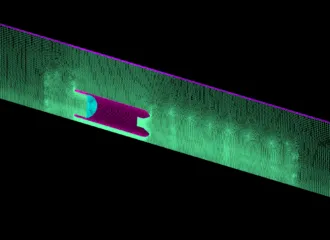
The 5th mode of transportation – Hyperloop is about to revolutionize the way we travel. Read about this surreal transport system from future.
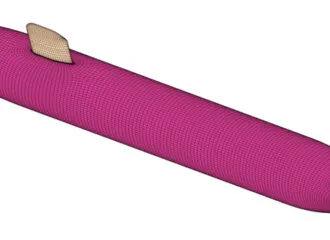
The domain and gridding needs for submarine CFD simulation change with the type of captive model testing. Learn CFD modeling of submarines.
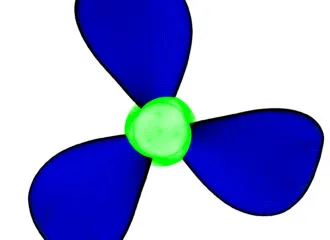
Many aspects need to be considered while meshing marine propeller blades for CFD studies. Read to know about propeller blade meshing.
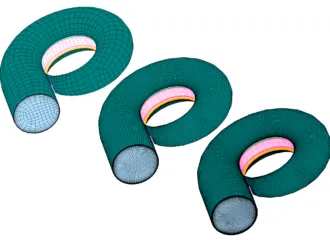
The article takes you through generating systematically refined grids in GridPro for Francis turbine with volute, vanes, runner, draft tube.
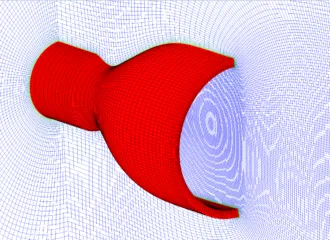
CFD meshing of rocket engine nozzles needs accurate capturing of separated shock, Mach disc, boundary layer. Read to know how to mesh nozzles.
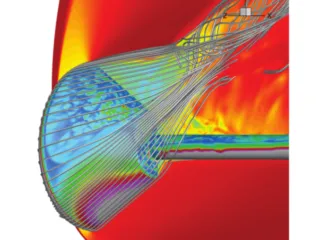
Accurate flow prediction around reentry vehicles requires high-quality grids with flow feature-based alignment. Tools in GridPro like nesting, compact enrichment aid in building flow physics aligned grids precisely capturing flow features like shock, expansion fan, free shear layer, wake, etc.
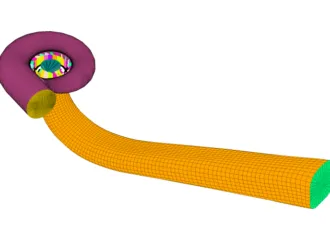
Meshes and the flow domain model selected influence the predicted flow solution in hydraulic turbines like Kaplan, Francis. Read to know more
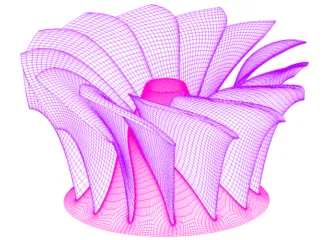
Cavitation in turbines is the phenomenon in which vapour bubbles form rapidly and collapse within a liquid. It occurs when the static pressure becomes smaller than the liquid’s vapour pressure.
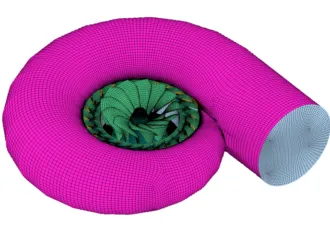
Francis turbines generate power by impulse and lift force. This article explains the Francis turbine’s working mechanism and flow physics.
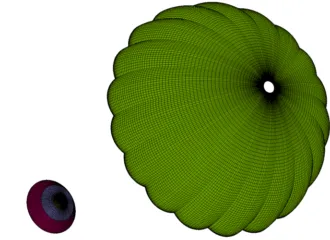
Supersonic parachutes brake the reentry vehicles’ speed during atmospheric descent. Read to know supersonic parachutes’ reentry aerodynamics.